fluid narratives
visiting doctoral researcher, université de strasbourg and conservatoire de strasbourg (crr)
about
fluid narratives is an intermedia research-creation project that rebuilds turkish marbling (ebru) as a live augmented instrument: a contemporary medium for sonic composition, interactive performance, and visual storytelling. historically, ebru entered the record largely through male masters and male master-apprentice lineages. contemporary practice has shifted dramatically: women now constitute a major, and by some accounts dominant, presence in the field. fluid narratives begins from this tension between who practices a cultural form, who becomes visible as its authority, and whose ways of knowing enter its history. the project’s feminist archive, interviews recorded in 2024 with ten women marblers in istanbul, records that presence in their own words. the project belongs to what eda er calls embodied technofeminism, and its research contribution is feminist instrument design: instruments that listen rather than command, hold memory, and transform an inherited practice instead of erasing it. begun as a doctoral dissertation at the university of california, berkeley, the project develops an augmented marbling instrument that translates water, pigment, and gesture into real-time sound and image.
intermedia, not multimedia: a single gesture across the water is the sound event and the visual event at once. neither is a setting of the other.
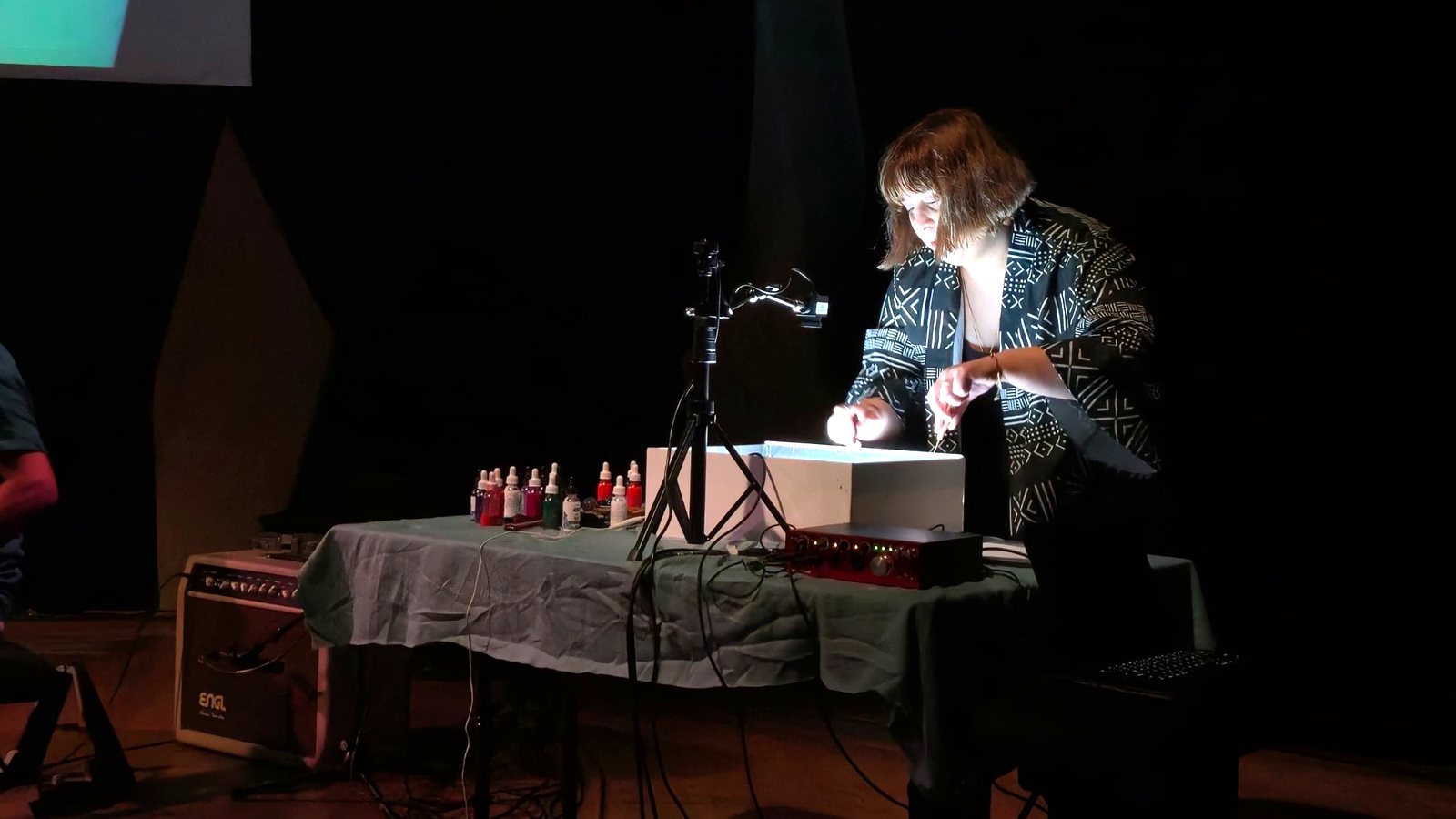
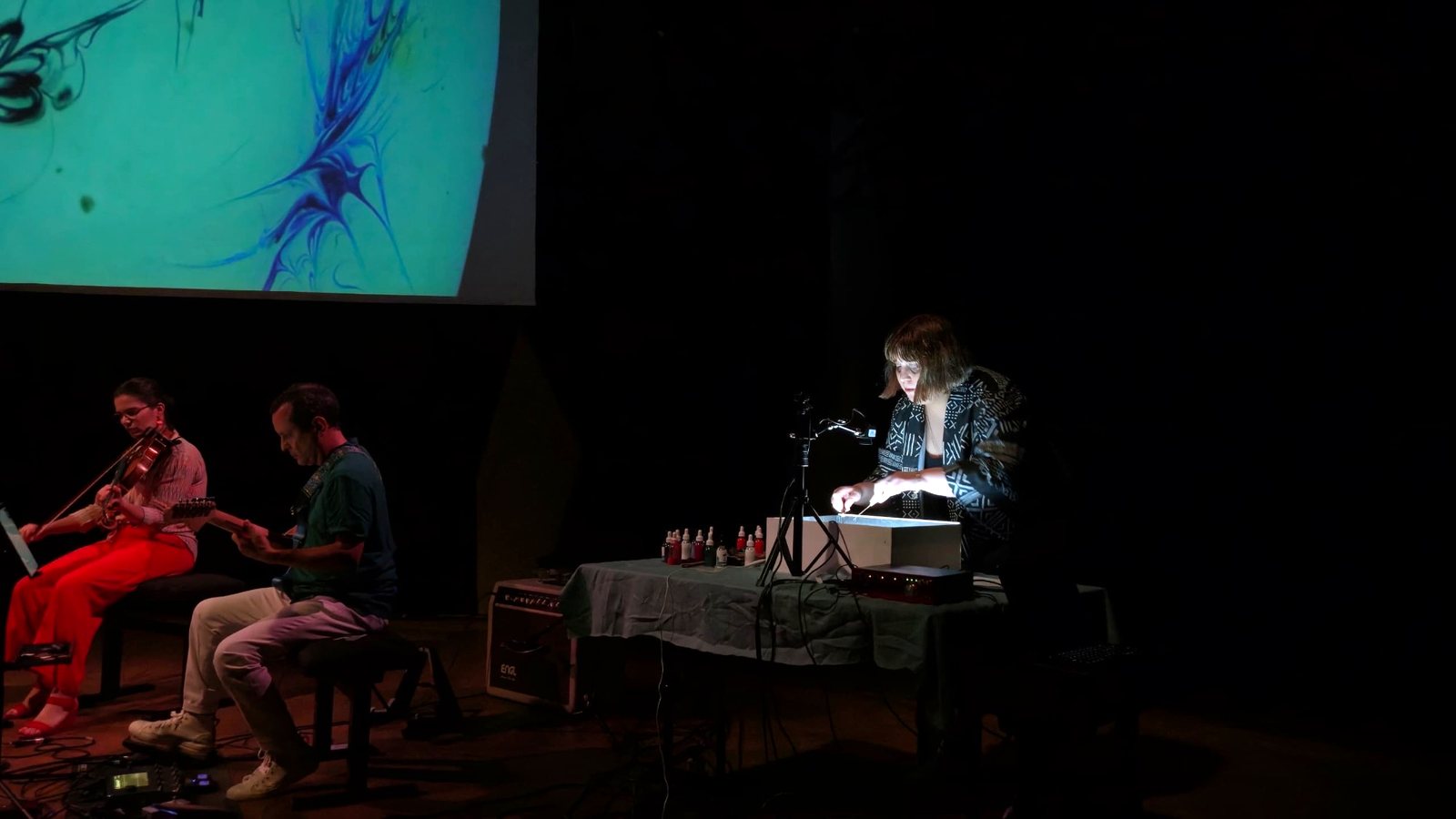
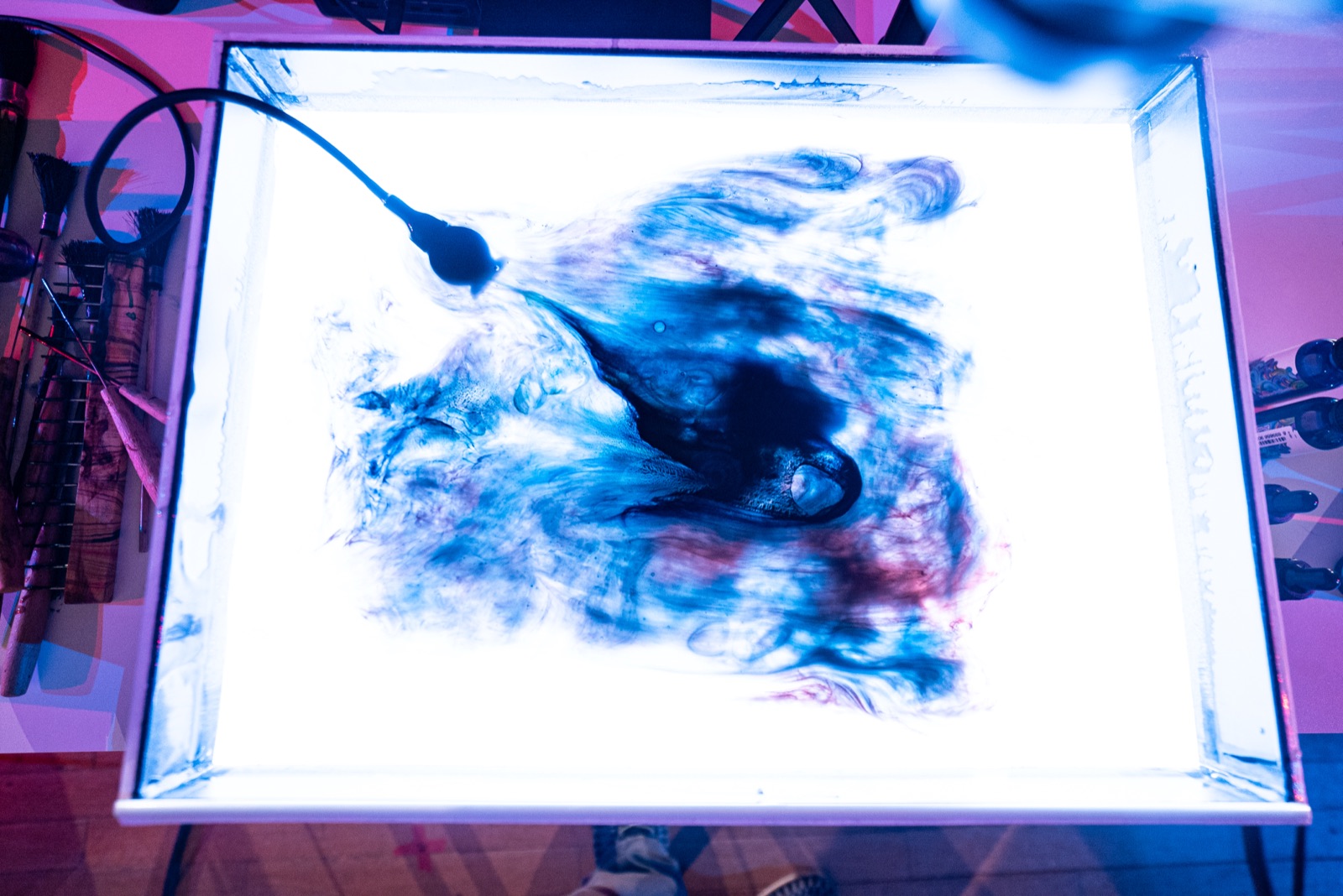
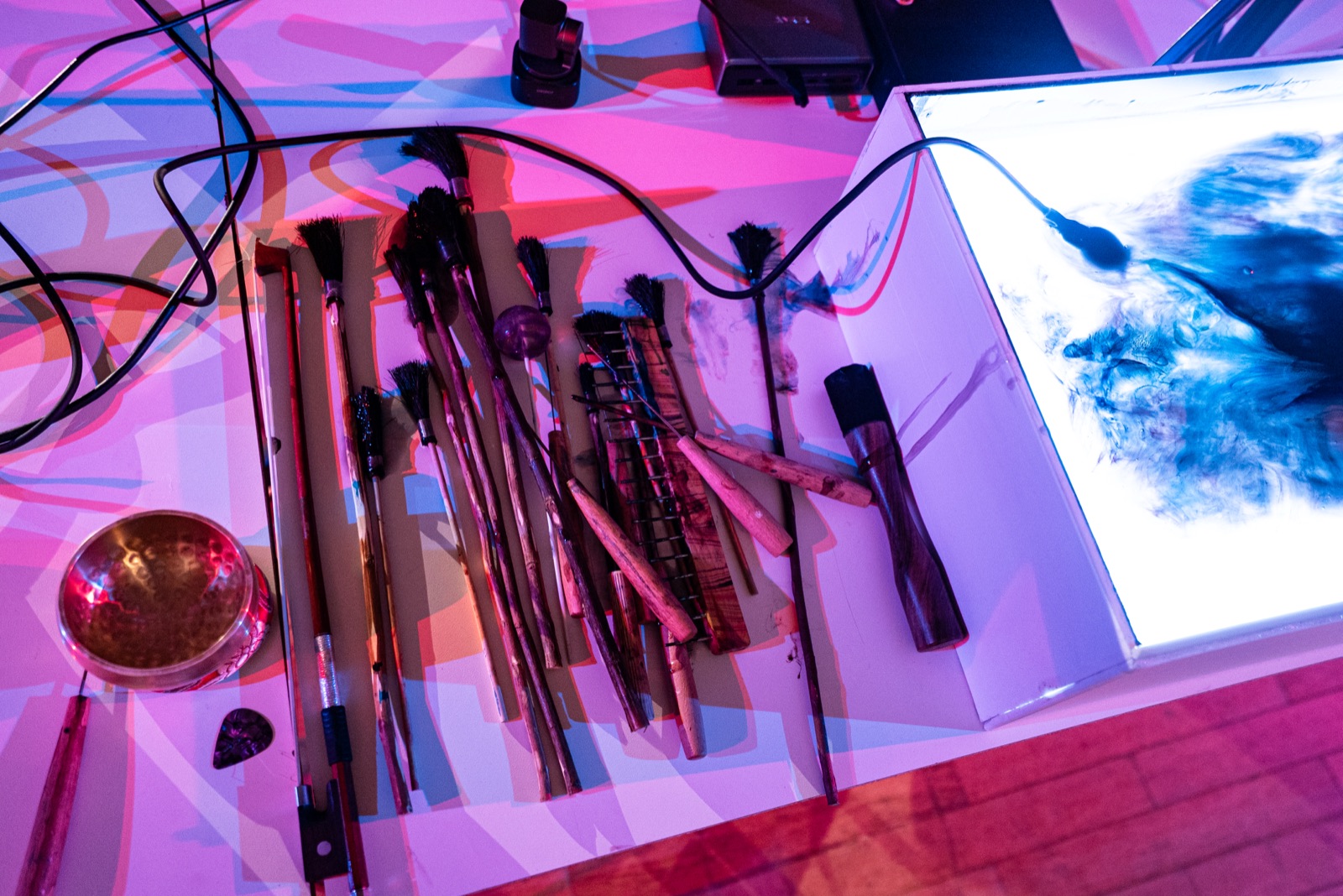
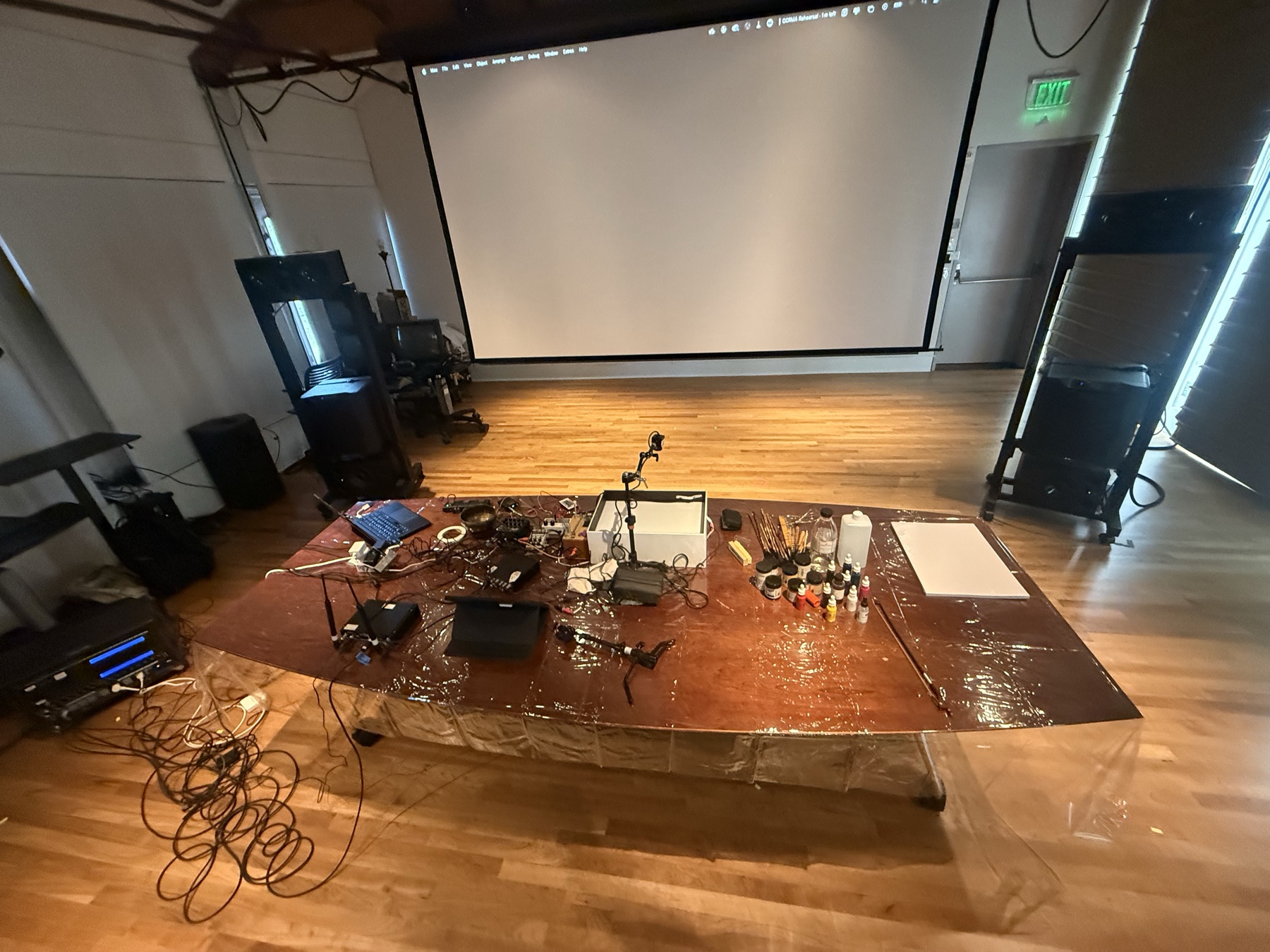
ebru is a fluid, ephemeral art form embedded in ottoman cultural heritage. this project expands its scope: contact microphones and transducers capture the intimate physics of marbling, while computer vision and custom max/msp software translate visual patterns into evolving sonic and spatial structures.
the bath is applied physical chemistry: tragacanth raises its viscosity, ox gall lowers surface tension so pigment spreads instead of sinking, and the pigment stays suspended, never dissolved. a marbled sheet is a frozen record of fluid behaviour at a liquid interface. eda er holds a degree in chemistry alongside her composition training, and the project treats it as evidence for its central claim: the craft was already doing the science, and nobody recorded it as science.
the research asks: whose knowledge counts as technological innovation? by foregrounding the material intelligence of a feminized craft tradition, the project challenges eurocentric narratives of technology and proposes alternative models for instrument design, notation, and performance.
instrument
sonic translation
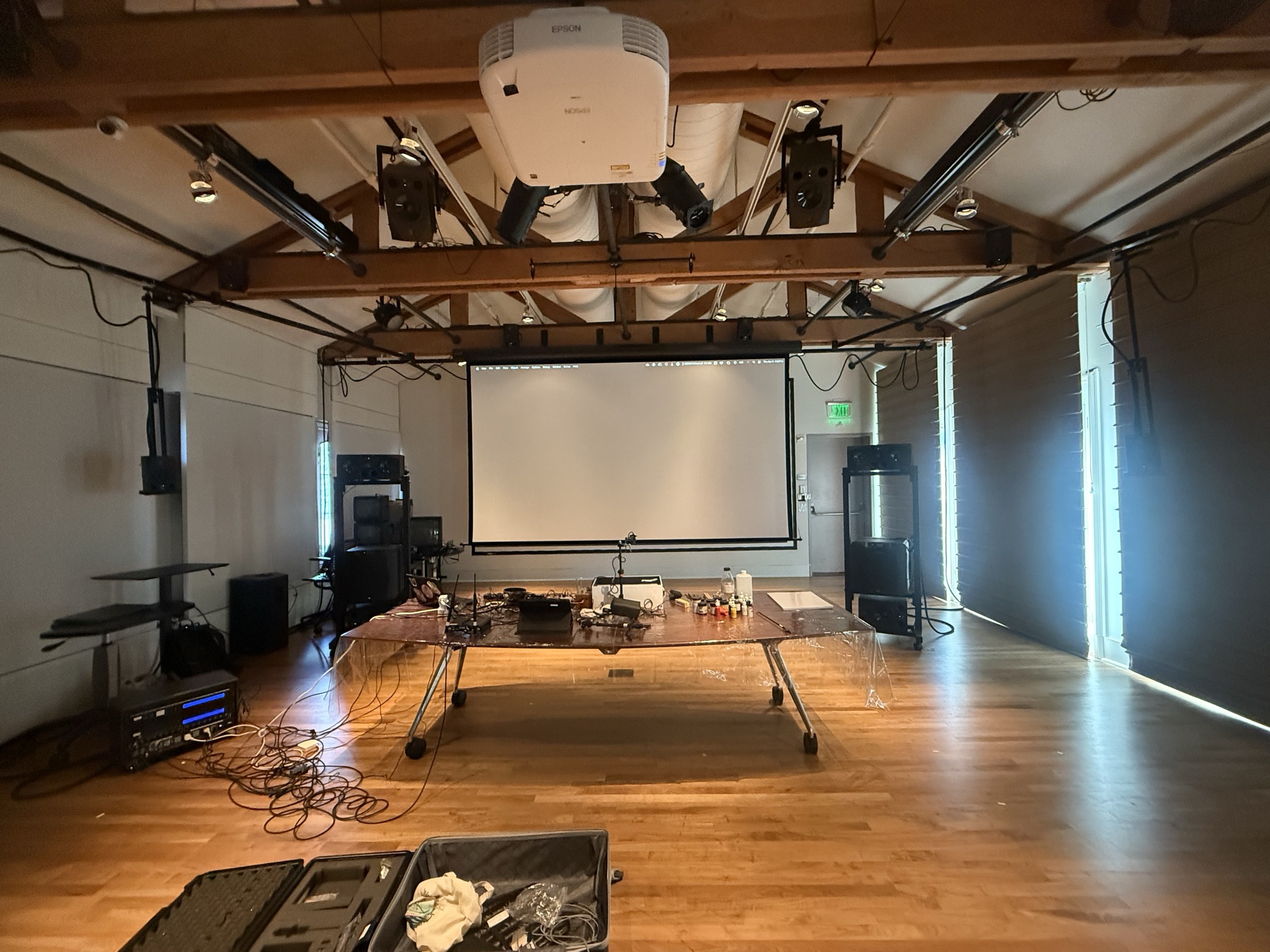
contact microphones capture water, pigment, and tools. custom max/msp algorithms translate gesture into granular textures, spectral freezes, and multichannel spatial diffusion.
feminist reclamation
recovering women's contributions to ebru and reframing material craft knowledge as technological innovation within postcolonial and feminist discourses.
augmented instrument
computer vision tracks fluid dynamics in real-time, generating gestural control data for spatial sound and interactive video. development spans cnmat (berkeley) and the université de strasbourg.
work
instructions for not disappearing
fluid narratives (ebru instrument · live electronics · live video)
object & movement · ca. 15 minutes · 2025–2026
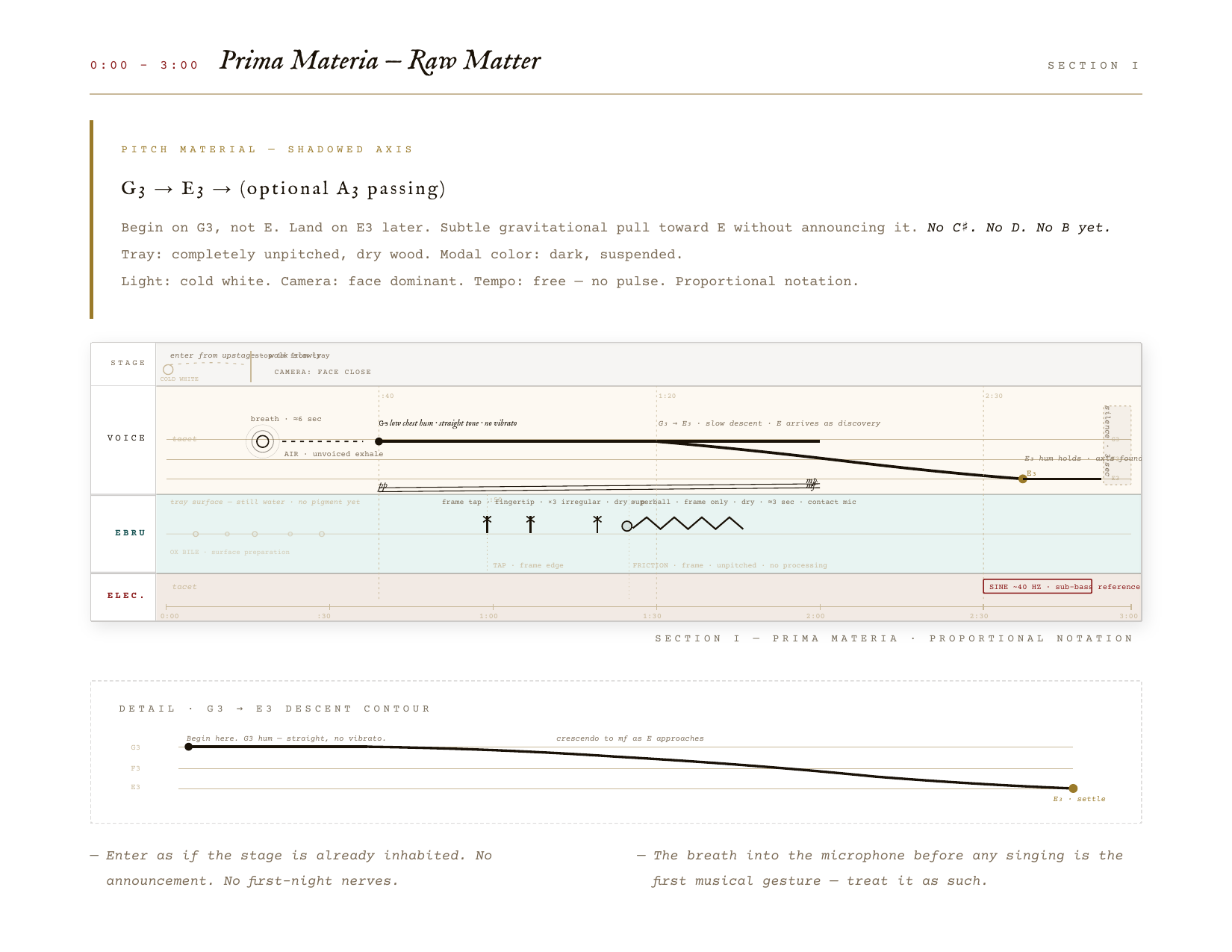
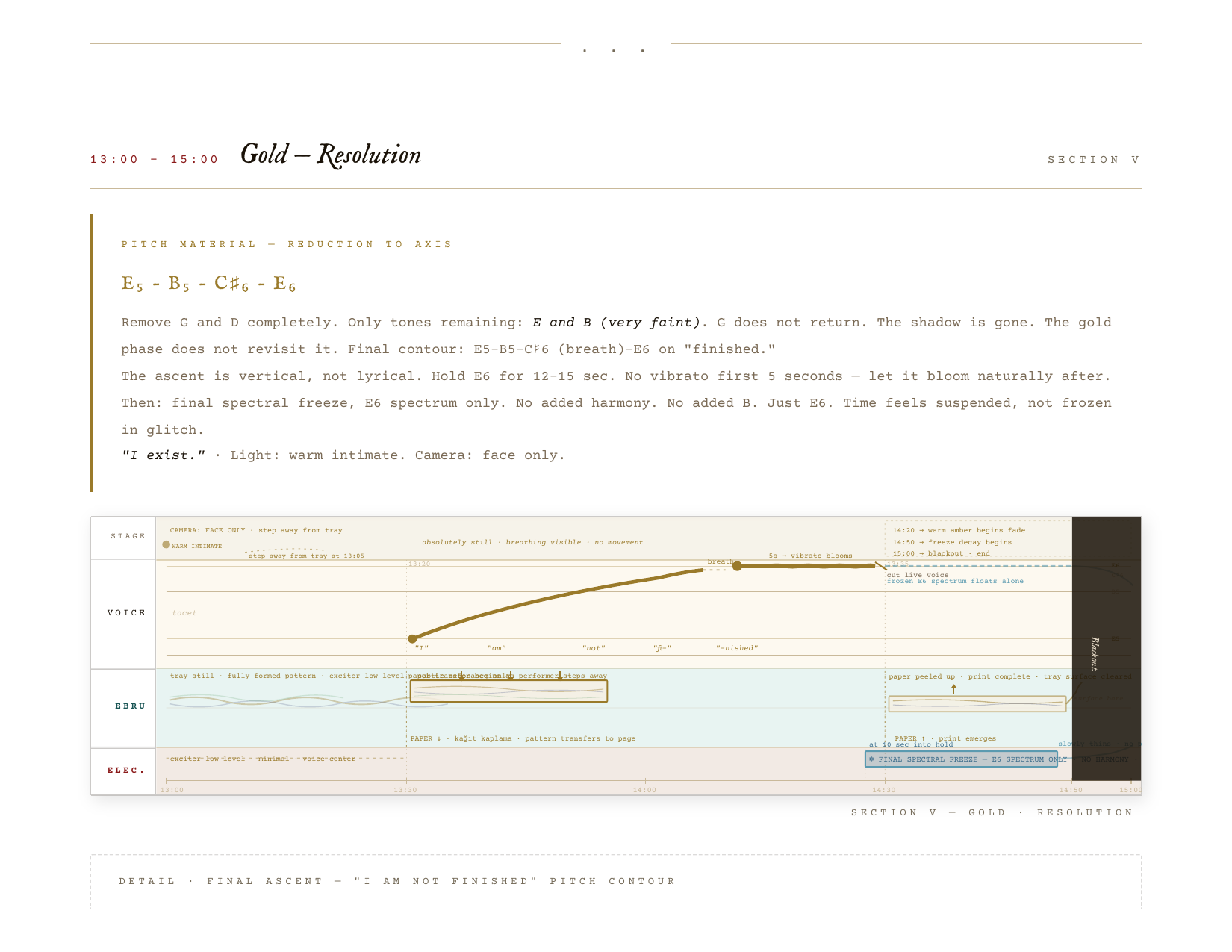
a 15-minute work following an alchemical arc across five sections. the harmonic field is progressively stripped until only a single pitch remains. the ebru tray acts as the primary electronic sound source; the voice emerges from its world.
opening pitch: g3 (shadow). final pitch: e6 (singularity). low register to high. ambiguity to presence.
the ceremony of almost saying
fluid narratives (ebru instrument · live electronics · video projection)
ca. 20 minutes · 2026
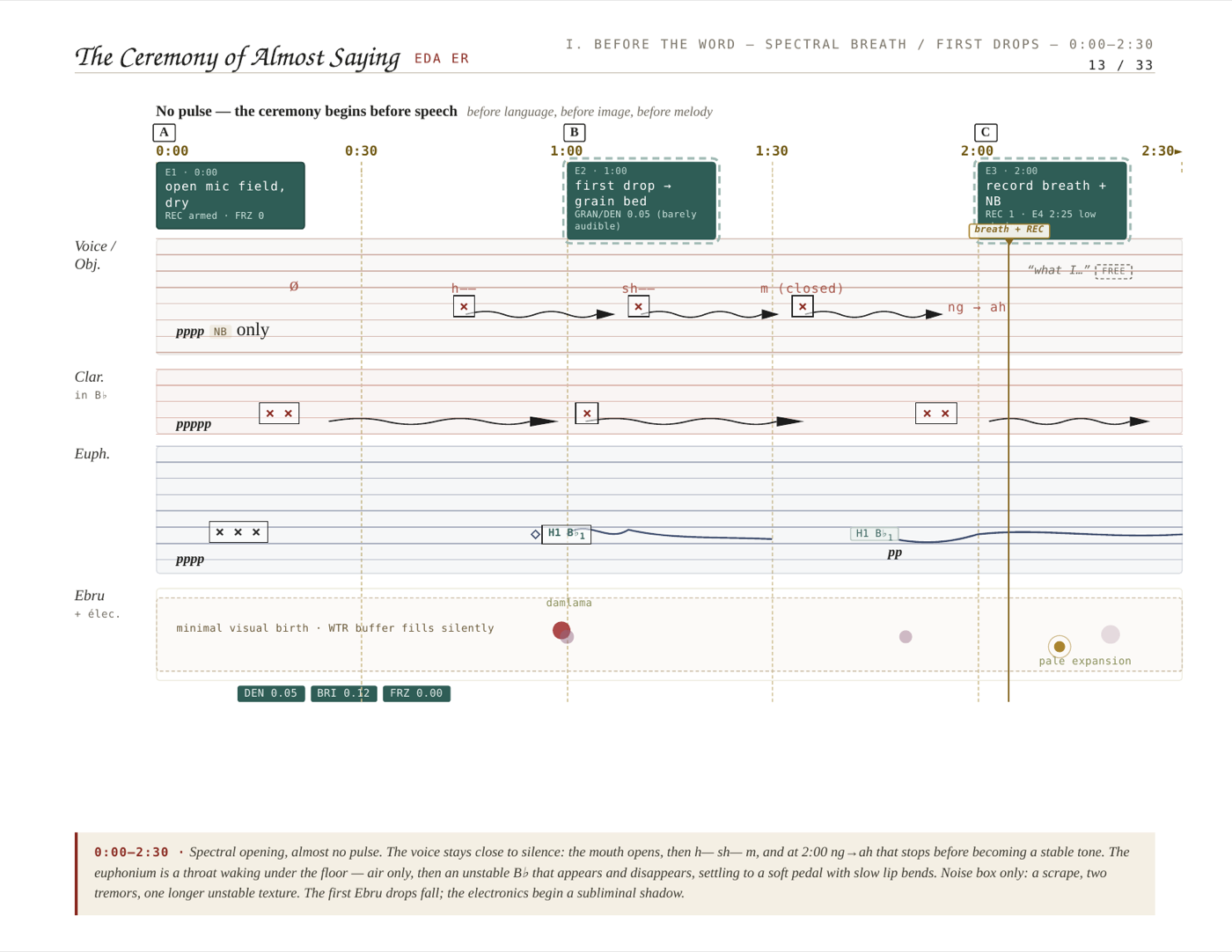
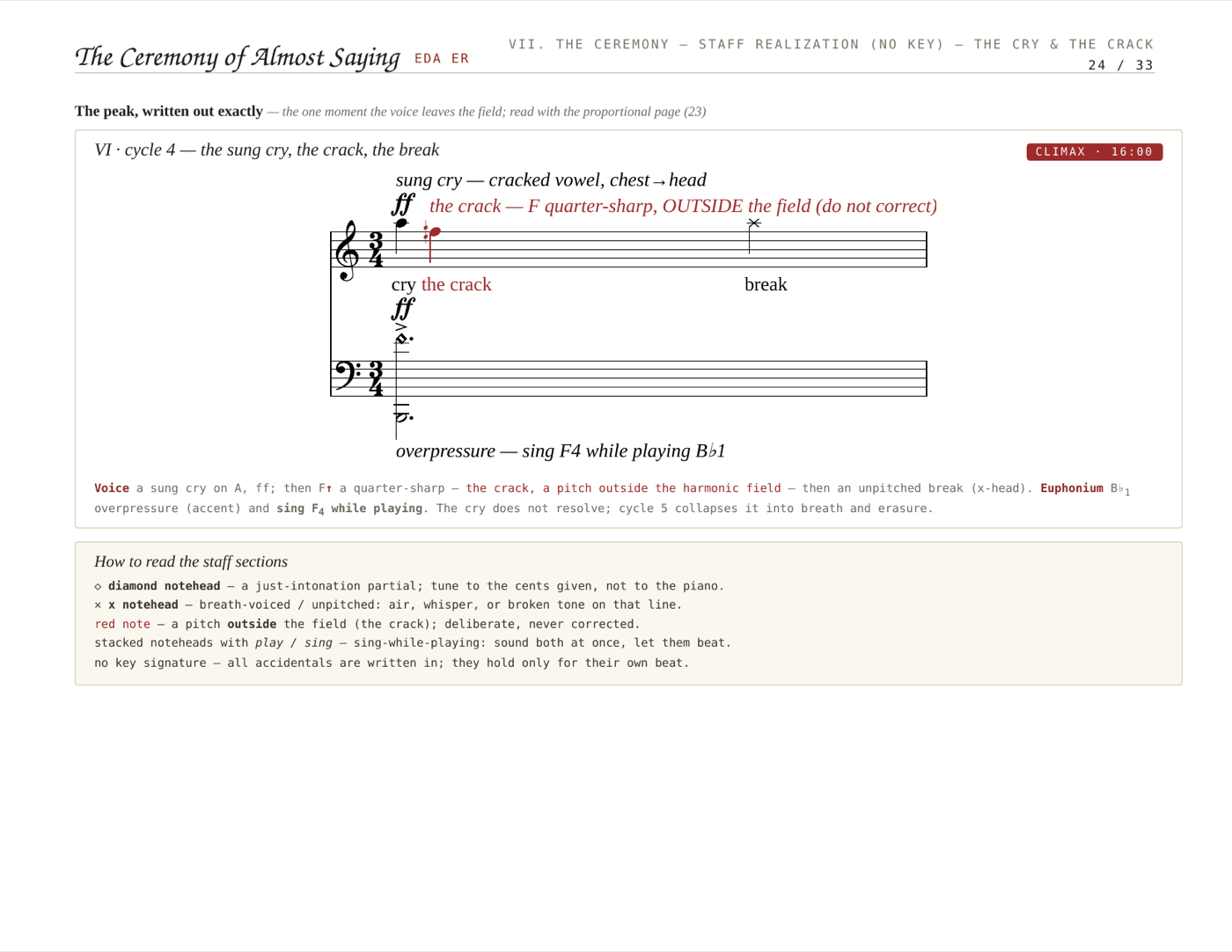
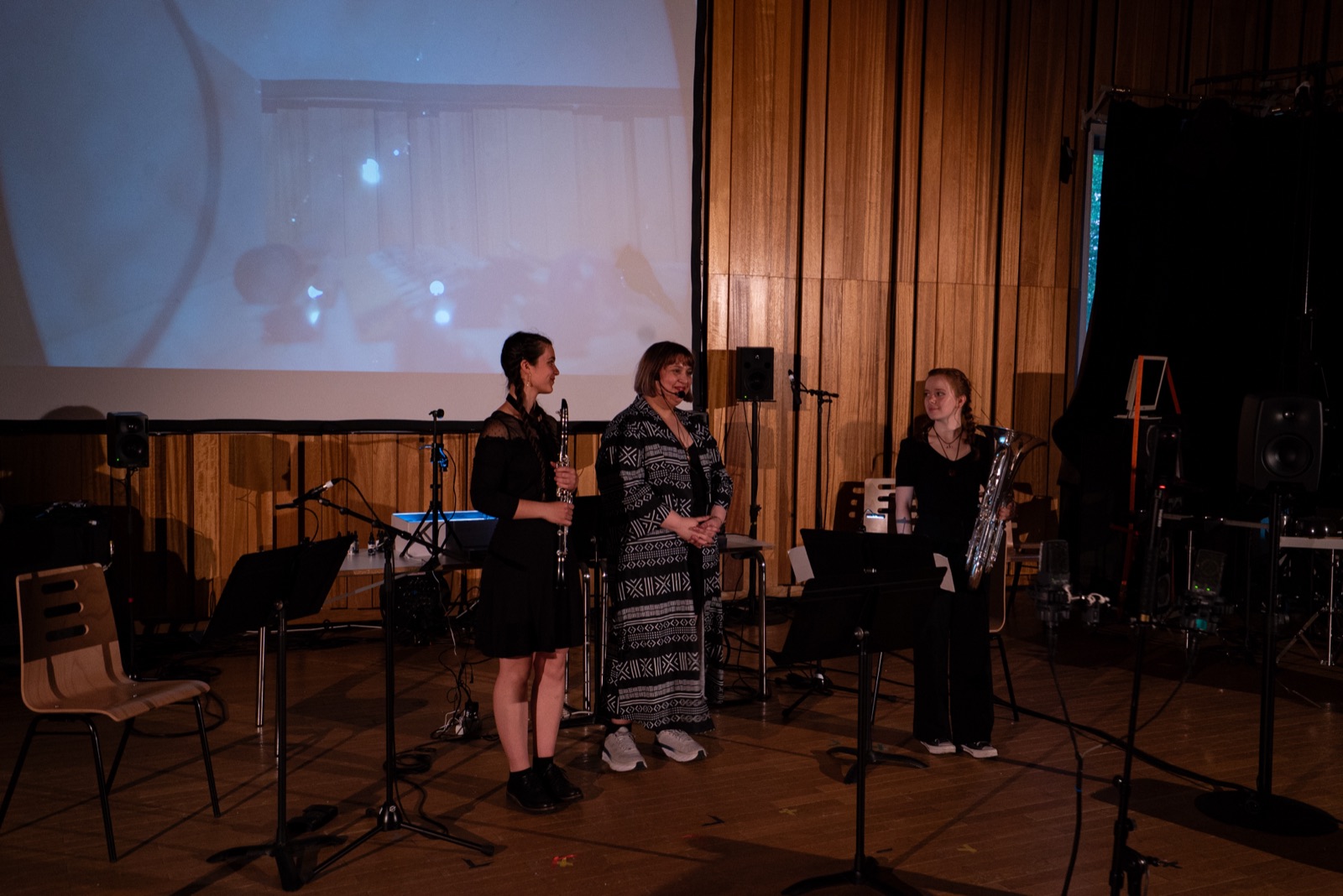
a ritual built on one sentence the body will not release: a single dangerous, precious thing every fragment is pulled toward. the audience never hears it. the voice tries to let it go; the clarinet (the reed, the failed articulator) tries to shape it into consonant and pitch; the euphonium becomes its external organ and carries the missing word; the marbling surface records the attempts as unstable traces; the electronics keep only what stays incomplete.
tuned in just intonation on the harmonic series of B♭1. through ceremonies I–VI only four partials are heard (B♭ · F · D · A♭) until the crack: an F quarter-sharp in ceremony VII, the one pitch outside the field, deliberate, never corrected.
echopraxia
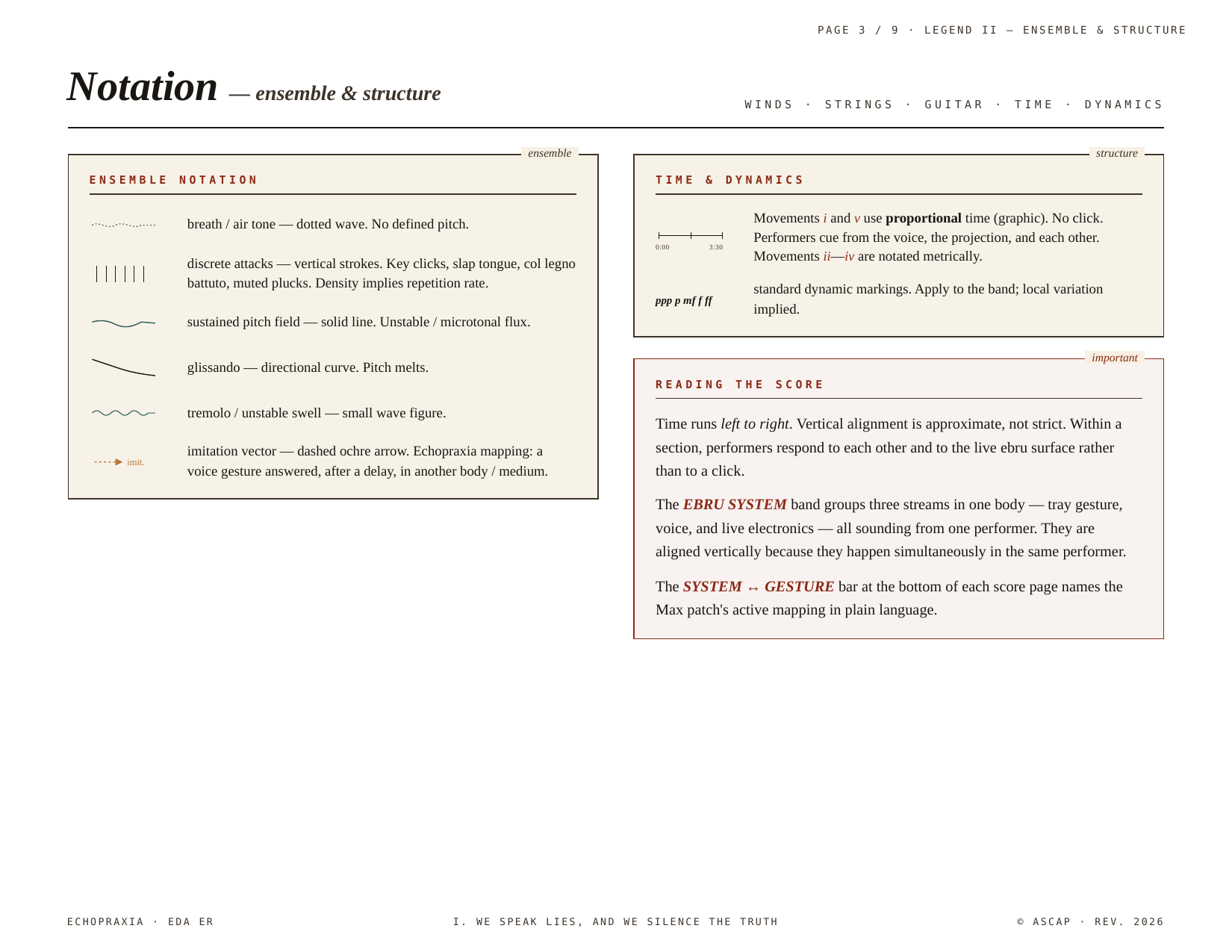
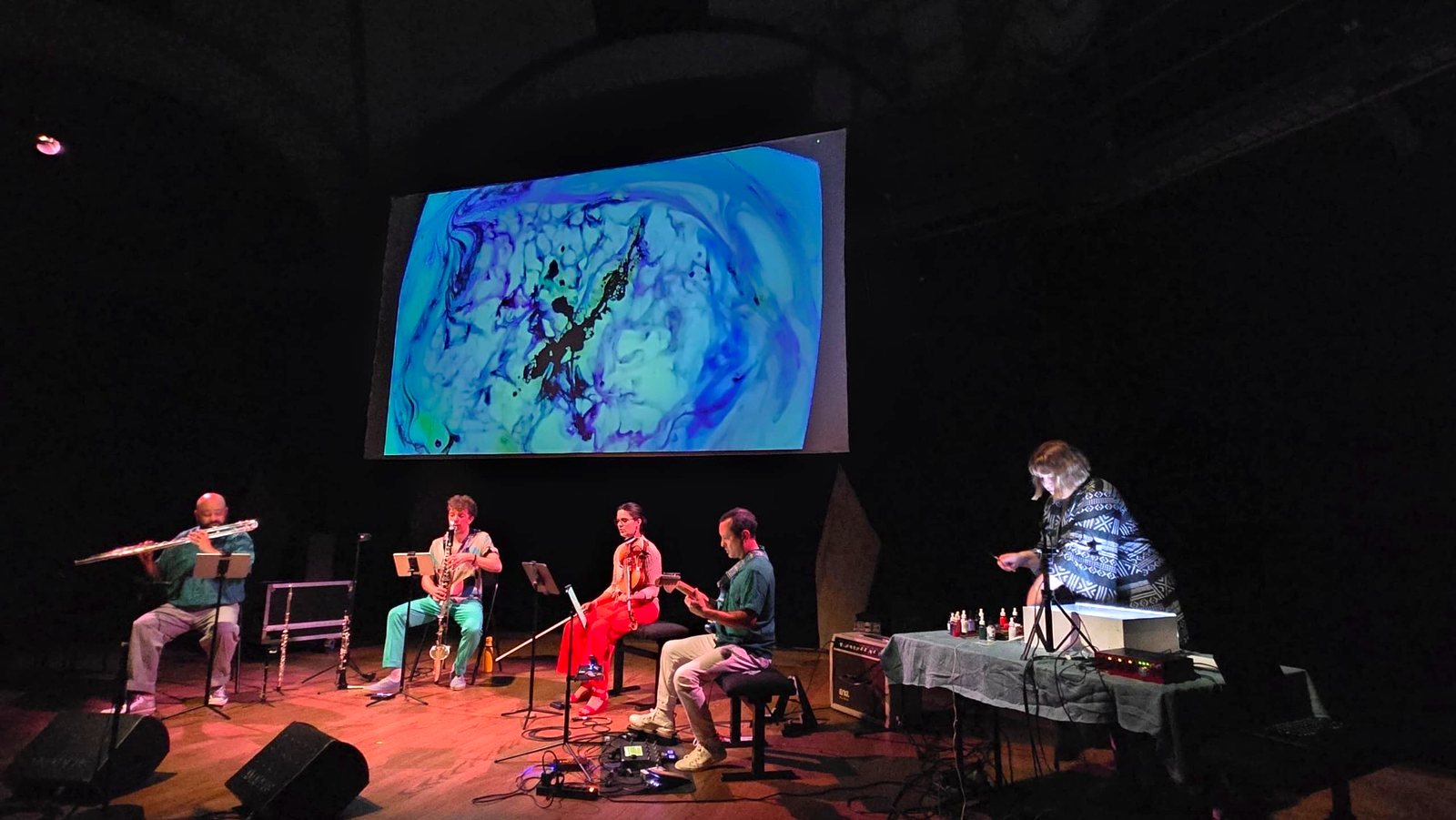
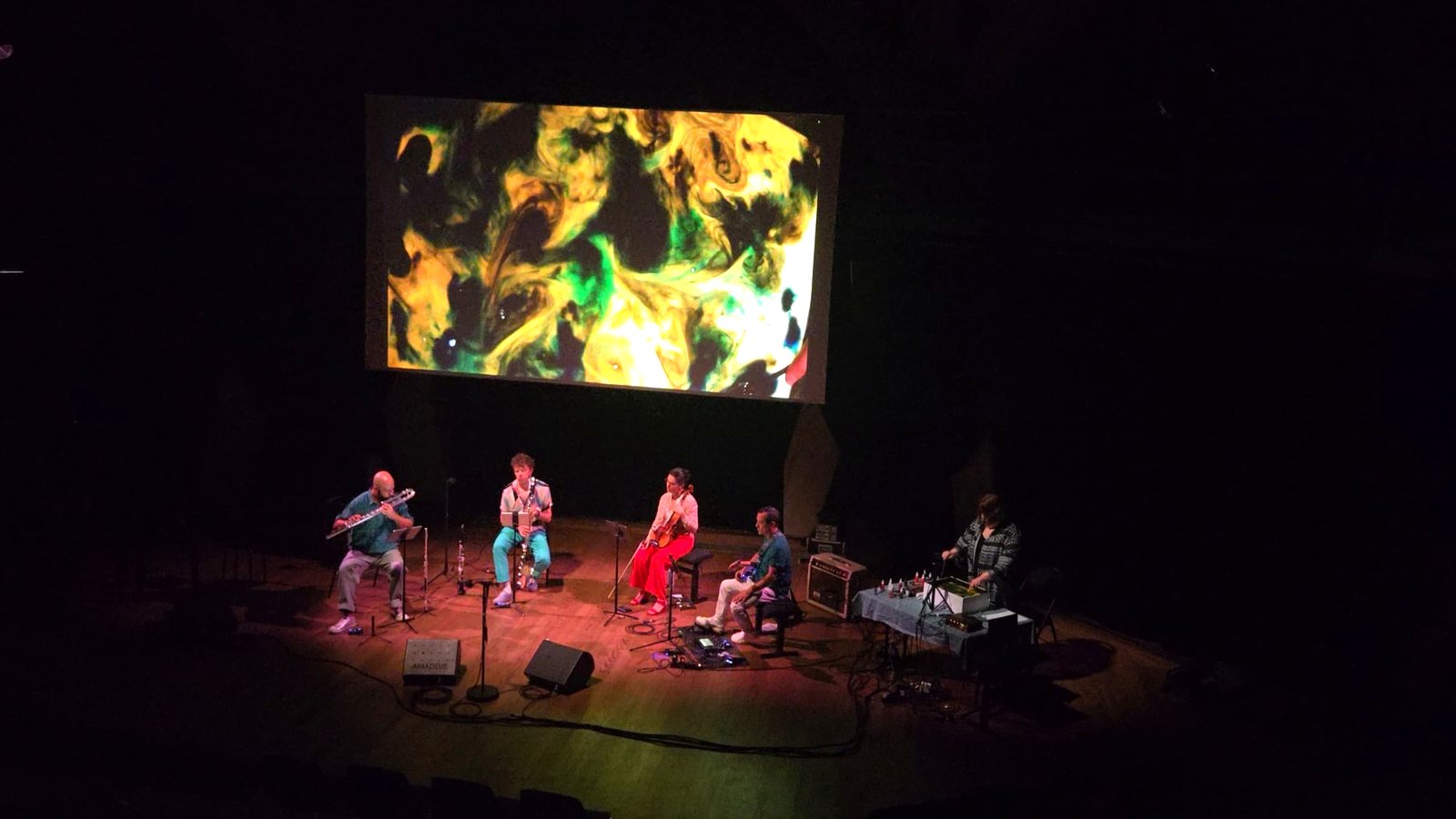
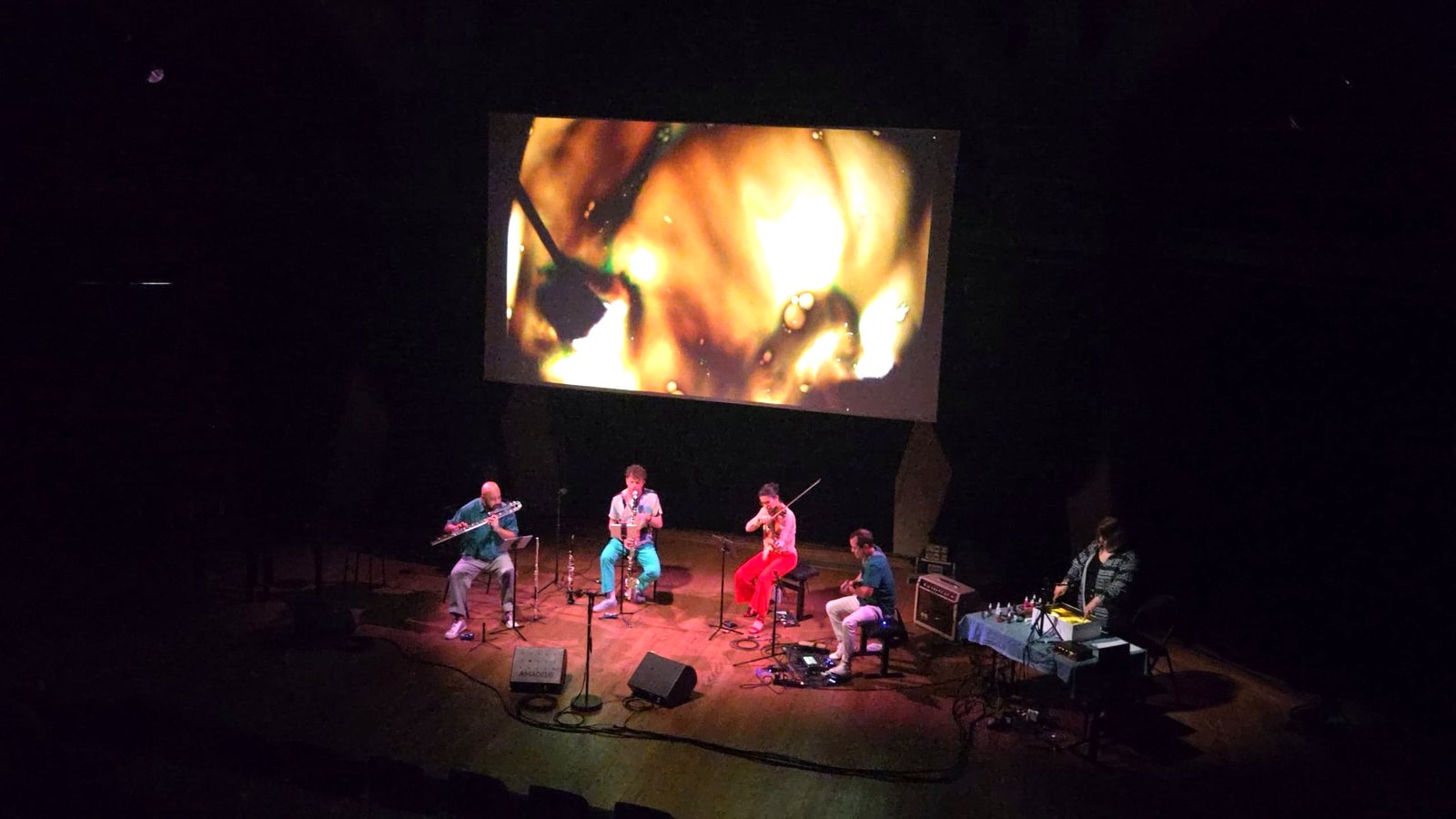
bass flute, bass clarinet B♭, viola, electric guitar (e-bow, pedals) · ebru system · live electronics
ca. 20'33" · 2024 / rev. 2026 · dedicated to collective lovemusic
echopraxia names involuntary mimicry: the body repeating a gesture before the self has consented to it. the piece treats imitation not as metaphor but as a physical condition: a system in which voice, instrument, water, and machine continuously reflect and transform one another.
the first sound is a single drop of pigment on water. the first movement is in the water, not in the ensemble. across five movements, no gesture remains singular and no repetition remains identical.
the daughter of oceans
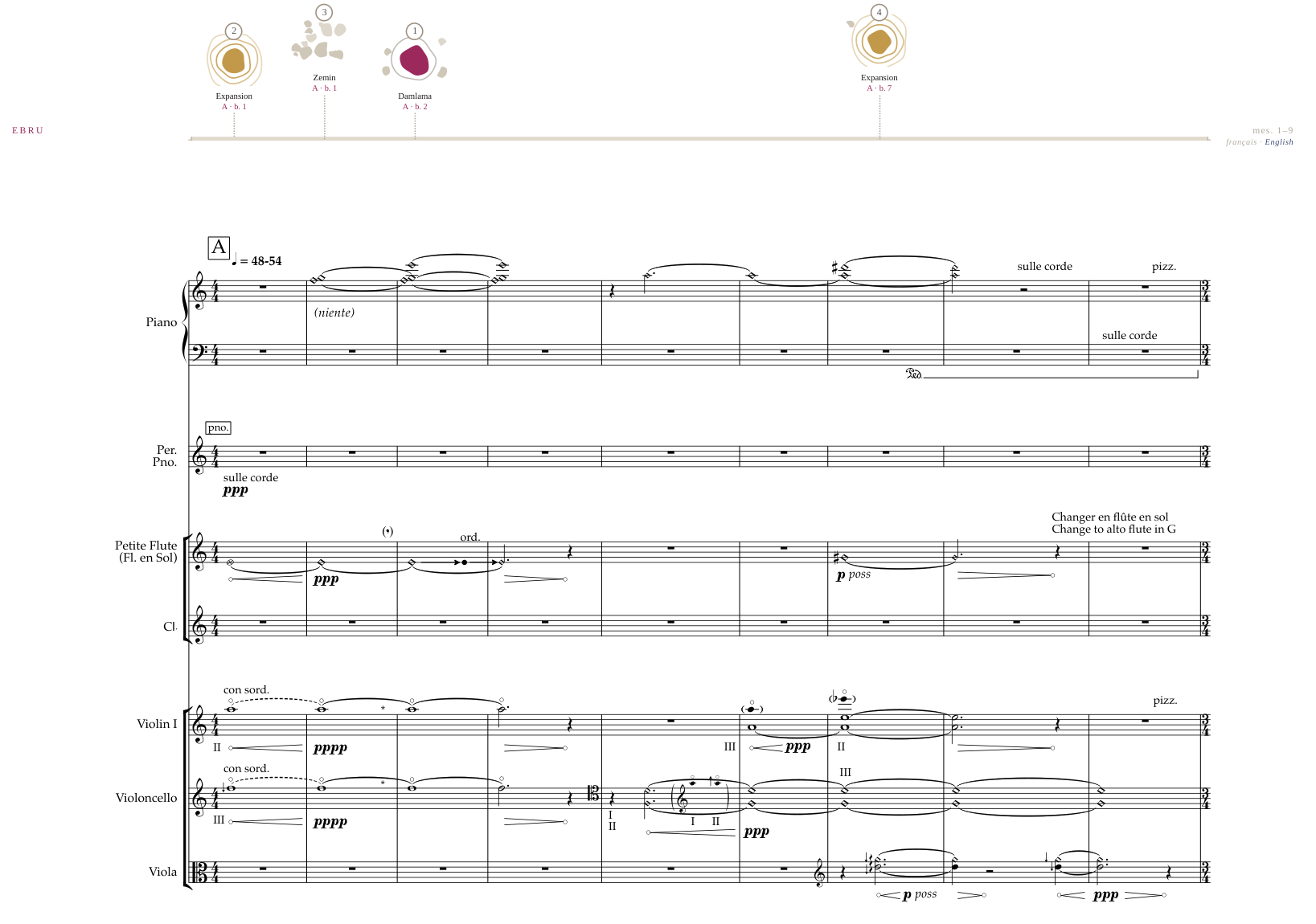
flute (piccolo · alto flute), clarinet, percussion (also piano II), piano, violin, viola, cello · ebru played by the composer
ca. 10 minutes · 94 bars and a coda · 2026
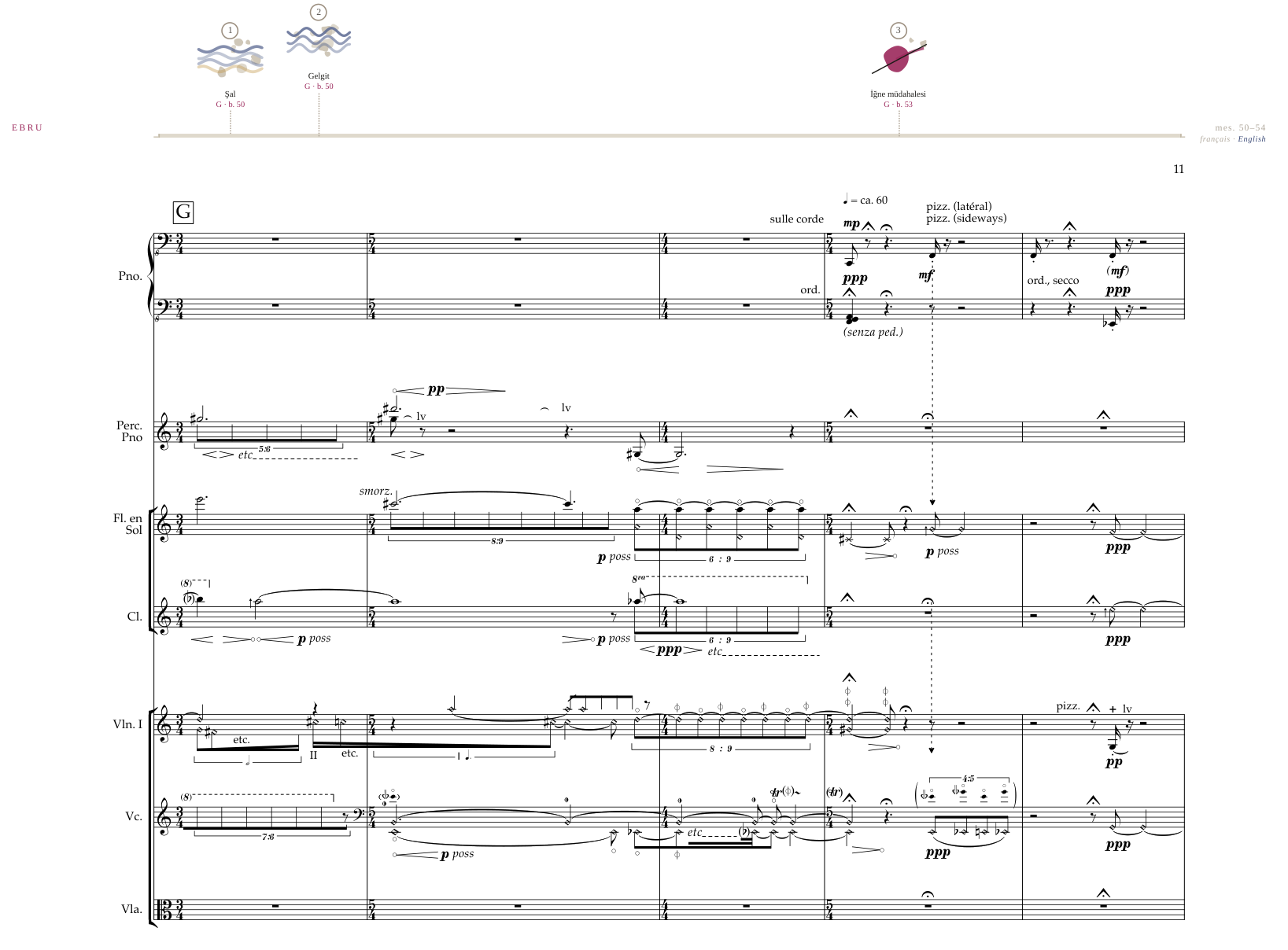
two notations, one rule. the ensemble reads a measured score: seven players, rehearsal letters a to l, ninety-four bars and a coda. the ebru reads twelve pages of gestures carrying no durations. the two layers are not synchronised by the conductor; they are bound by cause. each ebru gesture names a notated event, and that event alone triggers it.
seventeen gestures are written into the score, and an ebru band runs above every system so the players can see the water coming. the last of them, aktarma, the print taken, is the only gesture in the work that answers nothing: at the coda it gives the cue. the ensemble cuts on sight rather than on the conductor, when the print is lifted from the water and turned to the room.
performances · 2026
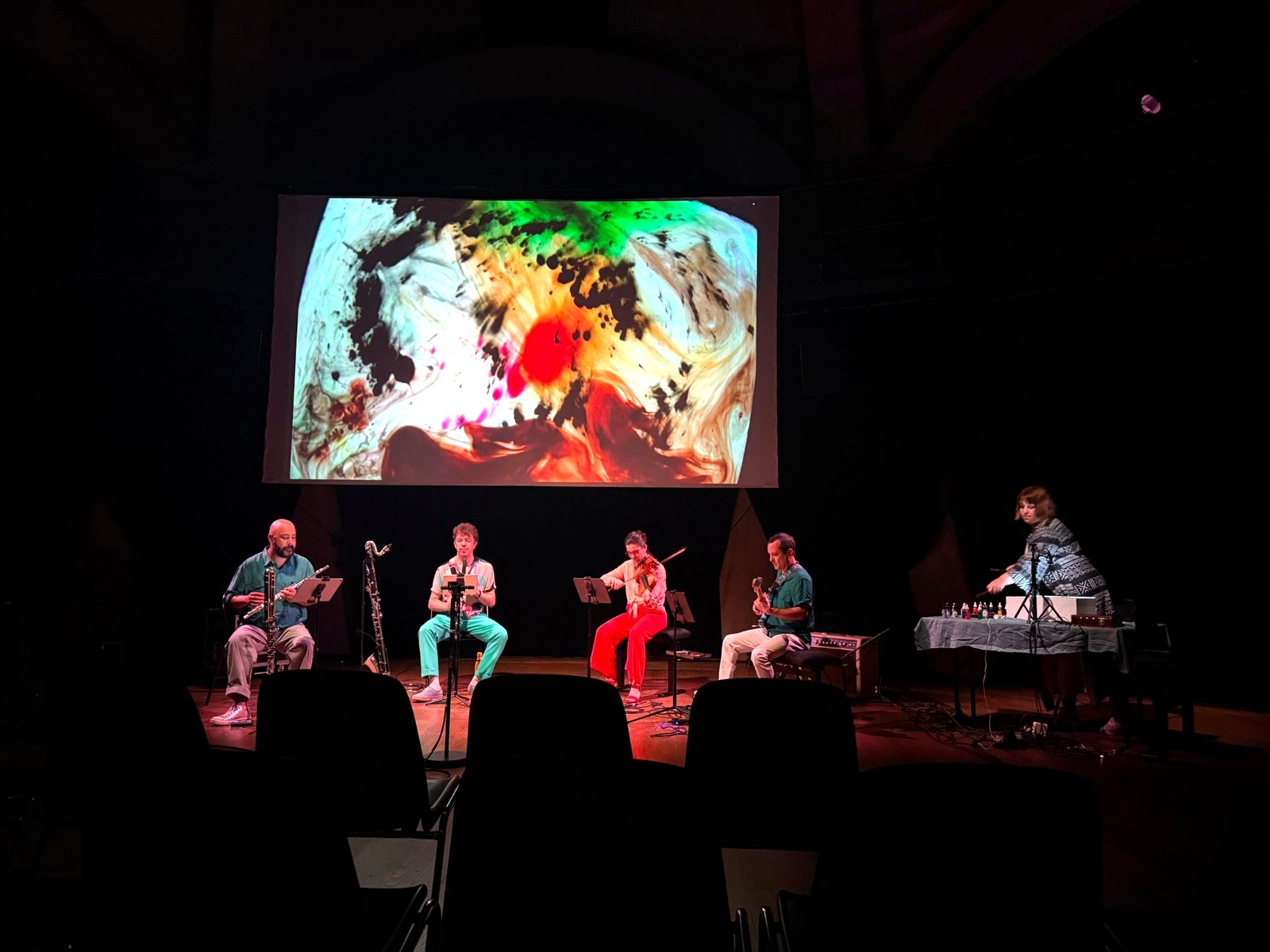
the first full arc of the project, completed spring–summer 2026: four dates, four institutional homes. the 2026–27 season opens with a new chamber work, the daughter of oceans, premiered by ensemble éclat in strasbourg.
presenters and curators: for booking inquiries, technical riders, or work-in-progress showings: info@edaer.me
watch
premiere films from the 2026 arc, and documentation of the augmented ebru instrument: contact microphones, transducers, and custom max/msp translating marbling gesture into real-time sound.

the ceremony of almost saying · premiere film
world premiere · conservatoire de strasbourg · ana zelinkova, émilie wendling, eda er.

echopraxia · premiere film
world premiere · gmem, marseille · collective lovemusic.

ebru, reimagined
ink, water, and a voice becoming current: short study.

instructions for not disappearing
for solo soprano and the ebru instrument: performance film.

extended documentation
full performance: voice, ebru tray, live electronics.

teaser · first prototype
~60 seconds of the first working system: contact mics, transducers, max/msp.
studio · documentation
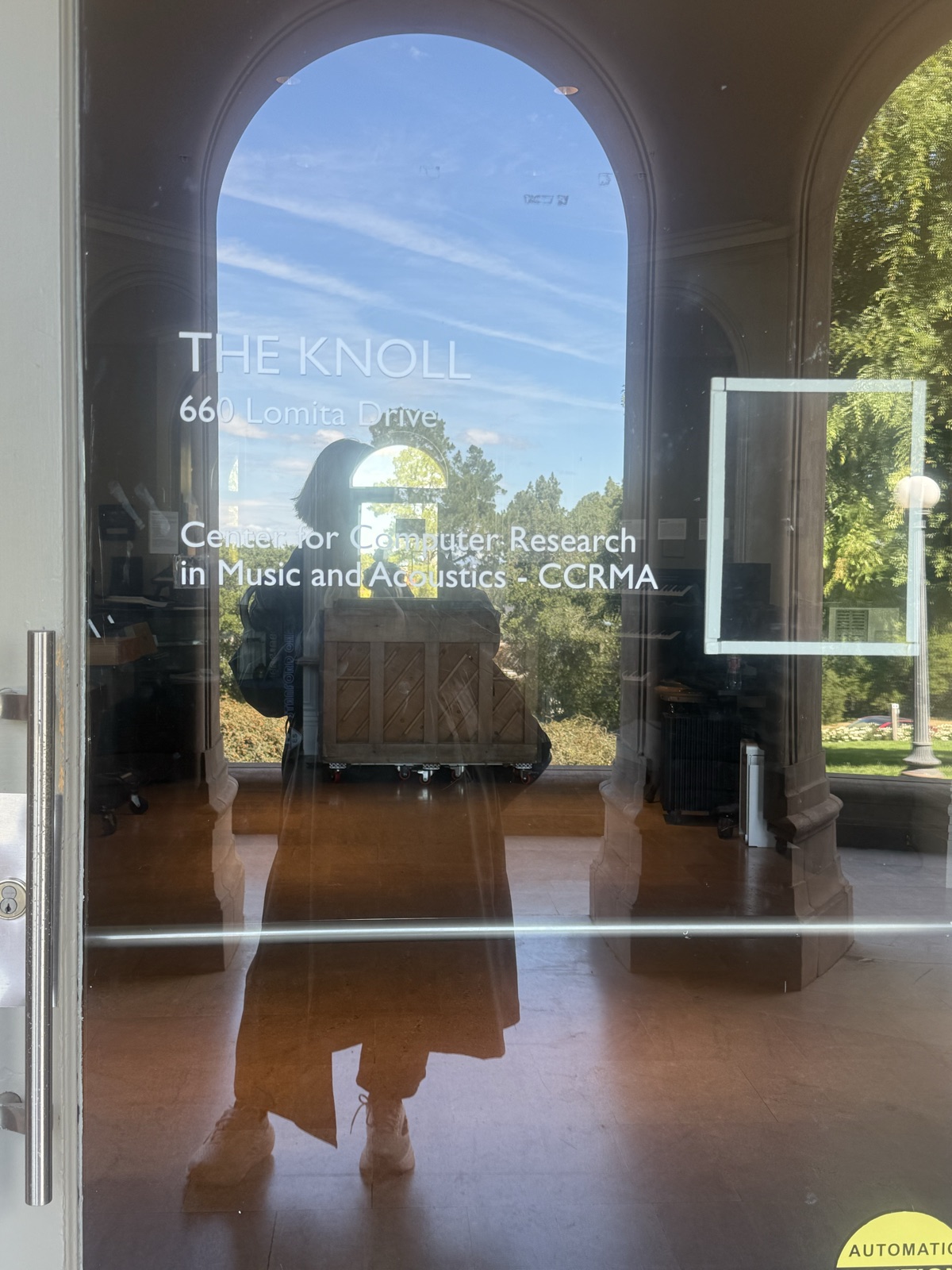
performance moments, instrument setup, and the spaces where the work is developed.


scholarship · ebru notation · gesture reference
each mark is the residue of a gesture in liquid, not a symbol.
damlama
single articulated event, any pitch, defined by context.
expansion
sustained tone, letting sound spread and decay naturally.
drag
continuous pitch or timbral slide in the indicated direction.
tarama
rapid reiteration or tremolo; speed proportional to density.
gelgit
oscillating phrase or pitch fluctuation; continuous motion.
feathering
unstable, vibrating sound; timbral or dynamic fluctuation.
bülbül yuvası
circular pattern: loop, breath cycle, or repeated figure.
hatip ebru
structured melodic or rhythmic figure within free context.
şal
layered, overlapping phrases; polyphonic wave motion.
neft
active silence; withdraw, leaving resonance or room tone.
iğne müdahalesi
precise articulation that redirects an ongoing gesture.
zemin
ambient texture or drone; present but never dominant.
rupture
sudden cut, abrupt stop, or violent accent breaking continuity.
diffusion
air sound, breath noise, or residual tone dissolving into silence.
resistance
sustained pressure: held tone, muted surface, effort against limit.
transformation
gradual shift of timbre or material; previous state still audible.
rules
writing
fluid narratives: turkish marbling (ebru) as augmented instrument, feminist archive, and compositional method · doctoral dissertation, university of california, berkeley (cnmat · bcnm) · complete, filing may 2027.
the voice of water · journal article on the augmented ebru instrument, its notation, and its performance practice · in preparation.
credits · acknowledgments
composer · performer · designer
eda er
dissertation committee · uc berkeley
ken ueno · advisor
mary ann smart · scholarly writing
edmund campion
myra melford
tom mays · technology & electronics · université de strasbourg
visiting doctoral research · george ladd prix de paris · 2025–26
tom mays · technology & electronics · université de strasbourg
daniel d'adamo · composition · université de strasbourg
yann robin · composition · conservatoire saint-maur-des-fossés
nicholas isherwood · vocal coaching · conservatoire de montbéliard
premiere performers
ana zelinkova (clarinet) · émilie wendling (euphonium) · the ceremony of almost saying (conservatoire de strasbourg)
collective lovemusic · echopraxia (gmem · marseille)
developed at
center for new music & audio technologies (cnmat) · uc berkeley
center for new media (bcnm) · uc berkeley
université de strasbourg
technical
max/msp · computer vision · contact microphones · transducers · multichannel diffusion
thanks
to the ebru masters whose lineage this work follows.
subscribe
updates on performances, publications, and the project.